


Changes Start from Awareness. Young Diversity Ambassadors and Their Projects
16.08.23
The Young Diversity Ambassadors program is now at its crucial moment. So far, participants have been studying. They took part in trainings, visited different regions in Ukraine to exchange experience. They came together in teams to plan how to change the world for the better and how to bring changes to their communities. STAN NGO supported 12 initiatives developed during this learning stage of the program. Young people implemented them in July. Each of these projects is already an achievement. These initiatives mean changes on a local level. And the most important thing for young people is gaining experience and inspiration to move on. The further text tells about the most interesting projects that touch on the environment, art, feminism and human rights. These four stories are about personal involvement, communication and a desire for change.

People are the most precious
Myhove is a tourist village. There is a ski resort and a bunch of cottages for rent. There are lots of environmental issues in the community at the same time. Most of the wastewater goes straight to the local river.
Inna Boiko from Myhove, The Young Diversity Ambassadors program participant, is not satisfied with such a situation. However, it is not easy to change. On the one hand, dealing with this issue needs working closely with the local authorities and environmental control bodies. On the other hand, locals must understand the problem since it starts with people throwing waste into the river and leaving garbage in inappropriate places. Anyway, this issue cannot be solved in a month or two.
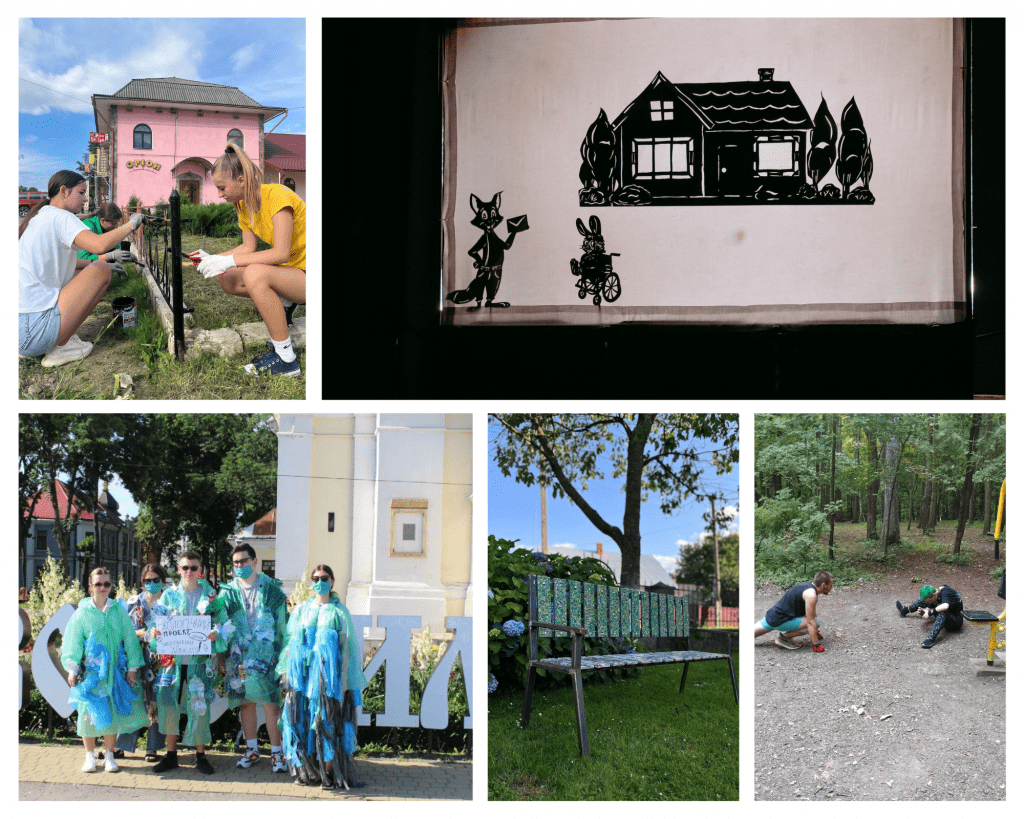
Inna started with some simple steps. She gathered active youth of Myhove (the initiative group is called “We Care”), and they started organizing toloka gatherings to clean the river banks. Then, with support from STAN NGO and partners, she set up a clean and cozy “Green space” in the center of the village. Activists put up benches made from recycled PET bottle caps, combined trash bins for five waste types and banners to explain how to recycle and why recycling is important.
Now there is one more place in Myhove to meet with friends and spend time. And there is a possibility to sort the garbage. “Green Space” will encourage the local community to think about environmental protection, about responsibility for the environment. And what is even more precious is that active people are united around this project. What they have managed to implement by now is only the beginning.
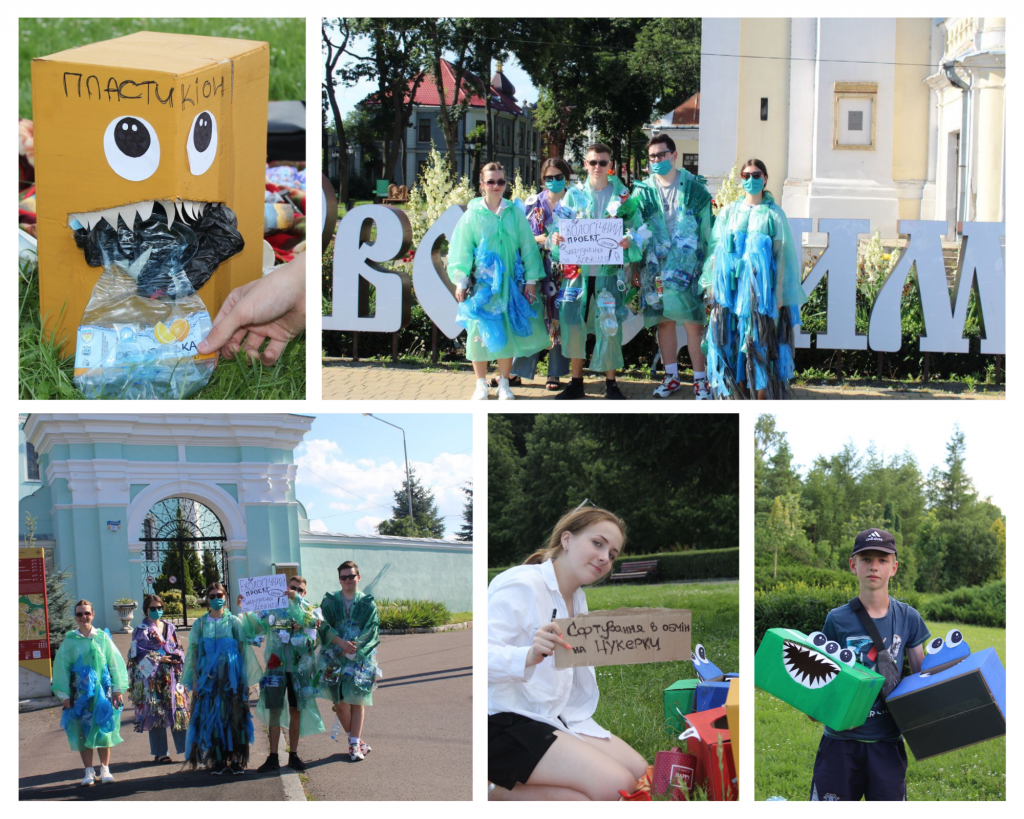
Ivanna Chuiko from the town of Volodymyr has a similar view on this. Ivanna curated an initiative called The Walking Trash. “Cooperation between people is the most important. You should value everyone who comes and works voluntarily for the idea”, she says.
The Walking Trash project in Volodymyr consisted of two parts. The first one was a performance. Ivanna with her team made “walking trash” costumes and volunteers walked around the town wearing them. This was a way to show, look, the state of the environment reflects us, it is a result of our everyday actions. The second part of the project is a mini festival that took place in a city park. Children, their parents and grandparents talked to activists about waste sorting and recycling, they learned how waste harms people and how animals die because of it.
“Adults were listening too. We did not intend to teach them how to sort the garbage. This is very easy, and everyone knows this. We wanted to teach them how to start sorting”, says Ivanna.
Don’t force us to hide
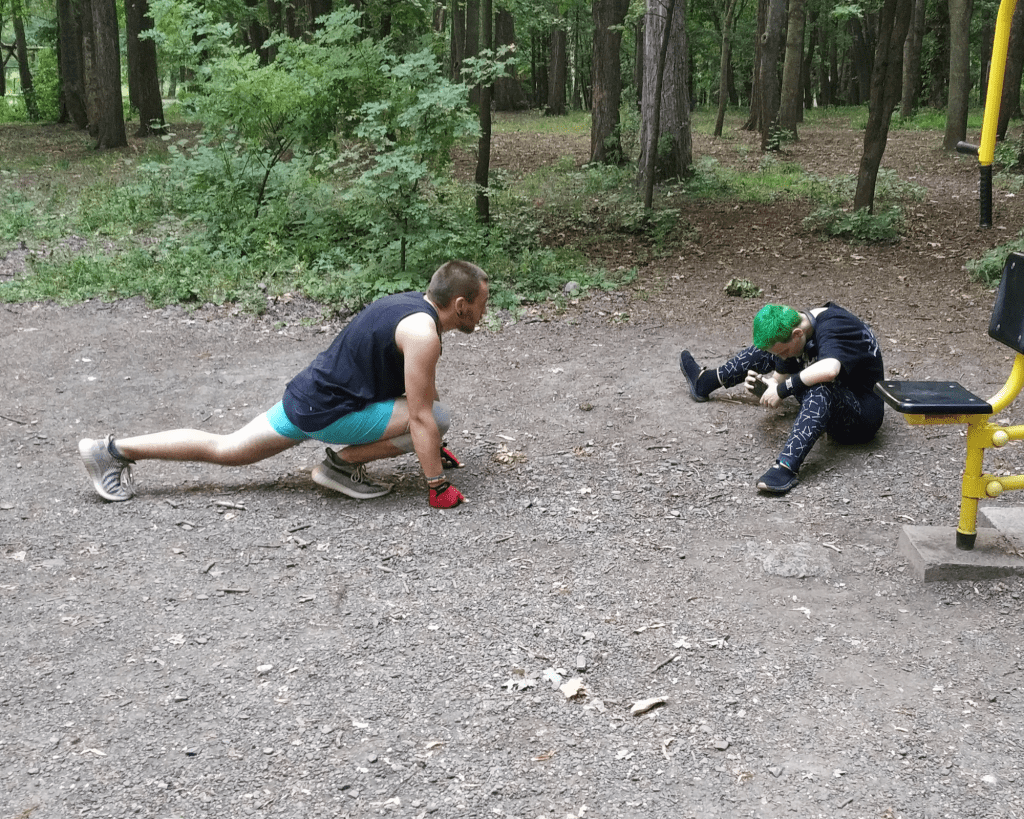
In the framework of The Young Diversity Ambassadors program Kir Nemichev created a short documentary film “Among Us”.
The most important thing is always in the end. The film ends with the words of the main character, a young man. “I’m an openly transgender person. It’s not because I want you to know what’s inside my trousers, but because you force us to hide”.
Society is not always accepting transgender people. Some just don’t understand, others are aggressive. But intolerance starts with ignorance of what transsexuality means. That is how humans are made: imagination always draws something scary in the darkness.
Oleksandr, the protagonist, sheds light on being a trans person. He explains how it feels, and what difficulties a trans person faces. For instance, he talks about getting a job when you are a man but in your passport it says that you are a woman. He also tells about relationships with his family: how his mom and young sister took his transsexuality, about his partner. And how he learned to accept himself.
Kir who is also a transsexual person hopes his film will help many people to widen their blinders. “I want them to really see what transsexuality is. I don’t want an impression of “Look, one more trans”, but I hope the documentary will change something in their thoughts, their views”, says Kir on the eve of the film’s premiere.
To the smallest about the important
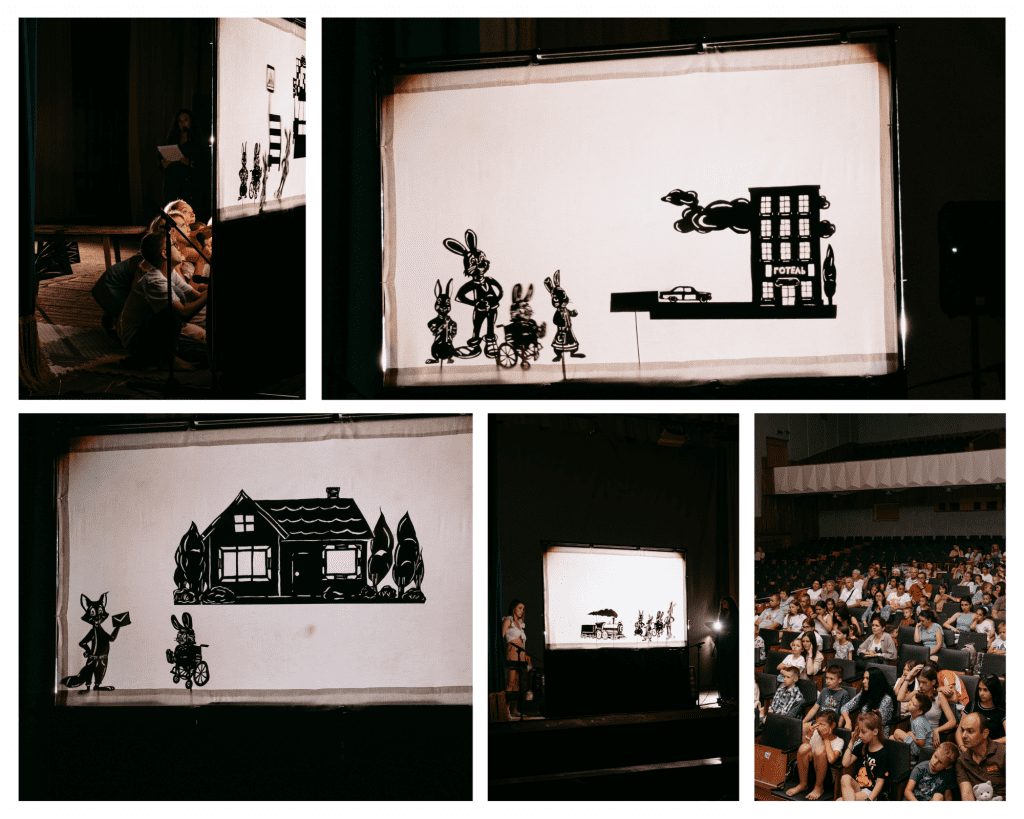
Early this year, a shadow theater caused a lot of agitation in Burshtyn town (Ivano-Frankivsk Oblast). The theater was founded by a team of a child-friendly space in Burshtyn’s shelter. Local community, internally displaced people and their kids warmly received its first performance based on Ivan Malkovych fairy-tale “Big city, small rabbit or Honey for a Mom”.
It was clear back then the initiative should have a continuation. And here it comes. People who started the shadow theater took part in the Young Diversity Ambassadors program, and it helped them to develop their initiative and create “A Shadow Theater: To the smallest about the important”.
What are these important things? Sadly, there are more and more people with disabilities now in Ukraine. Children who were injured by the Russian missiles and bombs, and soldiers who return from the frontline.
“Society has to be ready for this. We need an inclusive education, and it goes not only for schools. We have to address people of every age on their level. Thus, we decided to present one more important topic through the shadow theater”, says Daria Kremzel, “The Shadow Theater” project curator and acting skills facilitator in Burshtyn CFS.
Daria believes that Ukrainian society needs more information on this topic.
“We conducted a small survey. In our space, we talked with children and they told us a story when they saw someone with Tourette syndrome in a local park. The children were scared. But they were scared not because they are evil, but because they are not informed”, says Daria.
Let’s take another example. Daria says, sometimes children don’t know how to invite a child with a disability to play together because they are afraid to insult that child. Children don’t know if it is fine to tell somebody in a wheelchair “let’s go and play”.
So, it was decided to talk about inclusivity. Oksana Drachkovska’s book is about a rabbit in a wheelchair who was invited to visit the capital. The rabbit decided to travel and realized his way was full of obstacles. There are places he cannot move with a wheelchair, places with high pavement curbs, and no ramp. And it was very difficult to get on a train since the car was not equipped with a special lift.
The theater team worked hard both on the artistic side of the performance, and on the ways to deliver it to the audience. They contacted a local center “Dovirya” that is taking care of people with disabilities. Also, they established cooperation with a local NGO “See through Heart. This NGO published a book “How to talk properly about inclusion” where it collected the most widespread mistakes and examples of how to talk correctly. For instance, not “disabled” but “a person with disabilities”. The book was handed out before the performance.
This performance was presented in Burshtyn and Ivano-Frankivsk, as well as in Tenetnyky and Ozeriany villages. Many people attended it in every town. More than 170 people came to see the performance in Burshtyn, much more than came for the first performance. The shadow theater received several invitations, in Ivano-Frankivsk and to other regions. The issues the performance deals with concern the whole country.
“Ukraine has to get prepared in every town and village. Inclusion is very important for the post-war reconstruction. If we want to join Europe, if Ukraine wants to develop, it should understand these things. And this is very important for a younger generation since it will be working on Ukraine’s reconstruction. We’ll only start, and this will be their full responsibility to arrange our public spaces”, says Daria Kremzel.
The project “Young Diversity Ambassadors” is implemented by STAN NGO in partnership with the “Action Aid” alliance for rights, equality and international solidarity with the support of the Disasters Emergency Committee (DEC). Revitalization and insulation of the safe spaces for youth is implemented with the support of Global Fund for Children (USA) та terre des hommes (Germany).