


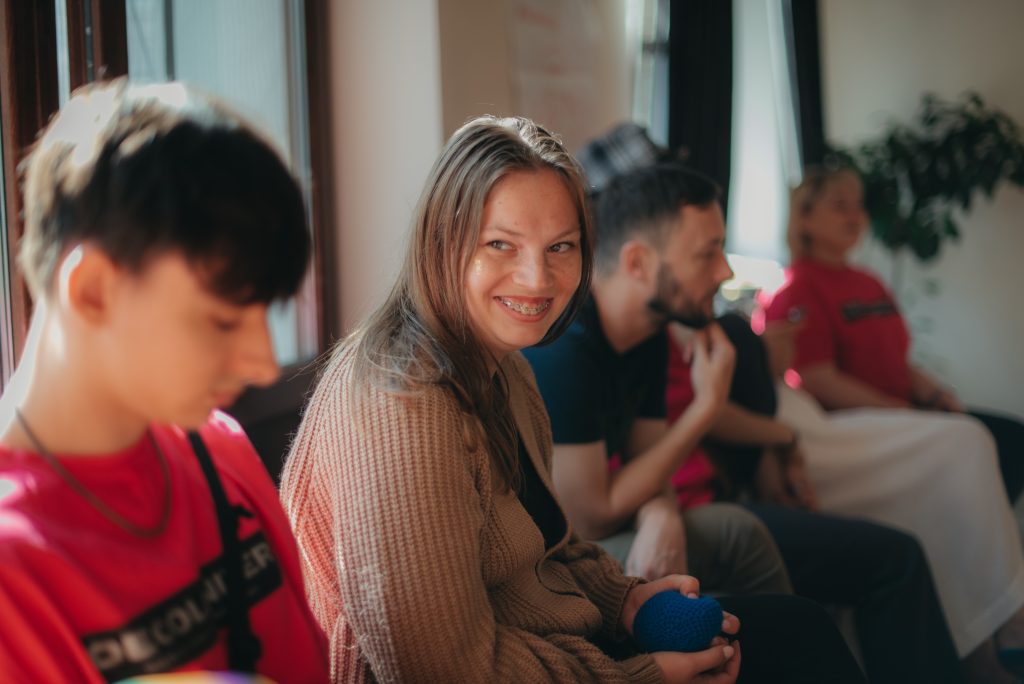
When you have someone to lean on. Supporting the young activists.
14.10.24
For several years, NGO “STAN” has been implementing a “Young Diversity Ambassadors” program. This project helps young people to grow, create their projects, and connect with like-minded people. It offers training focusing on human rights, leadership, inclusion, gender equality and feminism, LGBTQI+ rights, decolonization, the culture of remembrance, and the role and potential of art. The environment it forges will play an important role in Ukraine’s reconstruction after the war. It is integral to provide young people with an opportunity to focus on such matters so that occasional hardships won’t get in the way. That’s why, joined by the partners, STAN has launched a support program for active youth. Keep reading to learn how it works and who needs it.
Becoming independent
Youth was always the driving force behind the changes. Young people aspire to transform their country and their local communities. They have plenty of ideas, energy, and inspiration to keep changing the world for the better. However, it’s a mixed blessing. Young people usually don’t have their own house, financial cushion, or other features of “confident, safe adulthood.” Young people are only learning to be independent. With the ongoing full-scale war in Ukraine, they find it much, much more difficult. Still, the most active young people study and work (often balancing several jobs or projects), engage in volunteering and civic activism. They have plenty of commitment and enthusiasm but lack time and money. That’s why sometimes young people need help, be it money or moral support. Having someone to lean on is great, but not everyone has such an opportunity. That’s why NGO “STAN”, joined by the alliance for rights, equality, and international solidarity ActionAid and supported by the Disasters Emergency Committee (DEC), has launched a project providing individual support for young activists. The project is being implemented as part of the Young Diversity Ambassadors program. It is not about providing conventional humanitarian or financial aid. It fulfills individual requests, providing exactly what is needed.
Now activists and volunteers may apply for help specifying what they need. Say, someone has health issues and lacks money for medical treatment. Someone needs to pay tuition. Others need equipment to launch a business project. Many people require psychological counseling. Overall, the project covers the young people’s needs allowing them to focus on the most important things: personal growth, developing their community, work, volunteering, and helping others.
An internal monitoring was held, estimating the efficiency of the support. According to its data, 77% of respondents name learning and work opportunities as its main results. 63% of the respondents have also listed personal growth among the results. They mentioned getting help with buying things (computers, power stations), dealing with everyday problems (accommodation, clothing), and health services. It is worth noting that 76% of the respondents answered that the help was fully, 100% efficient. Even the 24% of young people who didn’t check this answer still mentioned that it helped them with realizing their plans. “It’s an opportunity to support young people, letting them keep up with volunteering or civic activism,” explains Volodymyr Kovtun, manager of the program.
The opportunities primarily cater to the participants of the Young Diversity Ambassadors program, but everyone with the experience of volunteering and civic activism is welcome to apply. Priority is also given to people who belong to vulnerable groups, are displaced, have disabilities, or reside in small communities.
We will proceed by telling how this support helps young people.
Anatolii and his story
Anatolii is 19. He is a student at the Kherson Agrarian and Economic University and the head of the NGO “Security prav” which fights human trafficking. In August 2022 he fled the occupied village of Oleshky, Kherson region. Soon afterward he became a volunteer. He says that it helped both others and himself. To learn his story, it would be better to give the floor to Anatolii himself.
“When we moved, I did nothing. Thank God, I have four brothers and two sisters, so I helped them with the homework. But I had nothing to do in the city. Be it depression or not… I am not a doctor to diagnose myself, but I was having a cup of coffee in the town, and then returned home, did my homework… and that lasted for six months. When I learned of the opportunity to be a volunteer at the Red Cross, I leaped at it, as I realized it entailed communication. Hi, how are you, and here I have a new acquaintance. They are IDPs — so these are definitely my people. Thanks to the volunteering I learned more about the civic sector and opportunities for the youth. Then I went to the youth summer school organized by the International Organization for Migration (IOM). That was where I learned about human trafficking. Unfortunately, I know about it first-hand.
When I was 13, I wanted to work in the seaside town. Lots of people in the Kherson region do it. Mom told me, “I can’t send you who-knows-where, I am afraid for you. I can send you to an acquaintance, though” (some time ago we were on a vacation at her place and we liked it). So my sister and I went there. The first week was OK. She gave us some time to adjust and swim in the sea. We stayed in the nice rooms. But one week later she made us move to the shed. We worked from 7 AM to 3 AM. I worked in the kitchen and at the bar. I was selling alcohol at the age of 13. She took our phones. Mom talked to this Svitlana, and she kept saying that we were OK. “Oh, they are working now. Oh, they are at the beach, that’s why they are not calling you.” All the while we worked day and night and didn’t even catch a glimpse of the sea. Thank God, our older step brother came to visit. He saw the situation and saved us.
Later I went to a workshop that gathered people fighting this problem. I thought, “Great, we can work together.” That was when we conceived our first initiative: four-day workshops where we spoke about the rules of safe employment.
Then I started going on the trips organized by VidNOVA.ua and joined Building Ukraine Together. I love traveling and getting to know new communities, but up until that moment, I had no such opportunities. In December 2023 I learned of the Young Diversity Ambassadors program. I liked that I would go on training in Carpathians, that the workshops would cover diverse topics, that I would be able to implement my own initiative. Already at the introductory workshop did I discover feminism (I used to think about it as naked women protesting near the city council). It was interesting to visit a workshop “Gender equality, women’s leadership, and feminism.” I can explain why it is important for me to highlight women’s role in society. I have two sisters, and I care about their future. All my actions now will have an impact on their life.
I really needed the support from STAN, because I am independent from my family (I was raised in a foster family). When I got enrolled in the vocational school at the age of 14, I was already a bit independent. I got a scholarship. Later, I started receiving compensation for my volunteer work. Over time I grew to rely on myself.
It’s nice when a young person quickly learns to make a living, but at times, it is tough to admit that I need support. Still, I managed to convey it to STAN. I used the financial help to buy some items of clothing. And an embroidered shirt. I always wanted but couldn’t afford it. Also bought a wardrobe that I didn’t have before.
I also used psychological counseling services which proved really helpful. I didn’t even use up all the sessions. Three meetings were enough, they helped me to gain a new perspective. At one session, the psychologist Anna told me, “Look outside, at nature: the flowers are blooming”. And I haven’t even seen it before. I walked around but I did not notice… Then I looked out the window and saw that the buds on the trees bloomed, and the leaves were sprouting. It would seem so easy, but it helped me a lot.”
“I am valuable, I am worth so much more than this”
Psychological support is a separate and integral part of the young activists’ support program, which is why two psychologists are routinely working with the organization. These are Yana Malyha whom we already mentioned and Mariia Yakymovych. Young people receiving support from STAN may also contact other specialists. Choosing a psychologist is a personal matter.
“Lots of young people were affected by the war and uncertainty,” Mariia Yakumovych explains what lies at the root of most requests. “Two and a half years have passed since the beginning of the full-scale invasion, ten years since the beginning of the war. It takes a toll. They don’t know what to do. Lots of them ask themselves, “Should I stay in Ukraine or try moving abroad? What to do, which career to choose, what will be in demand in several years? Will I even be able to graduate?”
Mariia also says that young people find it harder to study. Sometimes air raid alarms rang during the exam, and they had to stop, running to the bomb shelter. Students were stressed which affected their marks. Students also say that during night air raids they had to go to the bomb shelter. It is physically exhausting, and they are tired at the lectures.
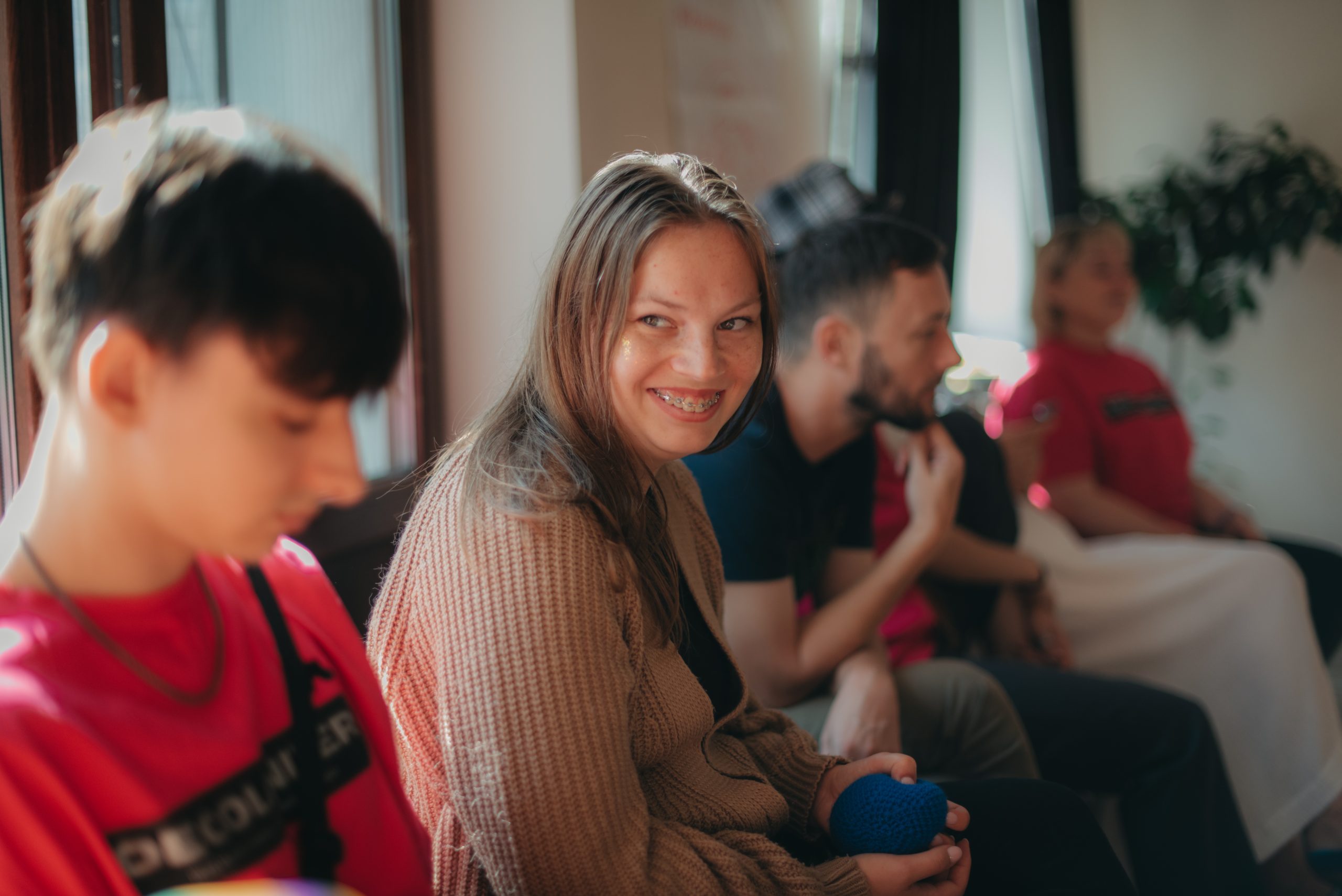
“Some young people have anxiety or depression,” Mariia explains. “When I noticed that someone was depressed, I offered a psychiatry appointment.” Many problems can’t be solved at the psychology session, and you need psychotherapeutic or psychiatric help. “During the consultations, I came to the conclusions that will remain with me for life,” Maksym says. “I also talked about suffering from constant anxiety and having chronic headaches after stress, and Mariia didn’t let it slip. She helped me to find a qualified psychiatrist. Around a month has passed since our last meeting, and I can say that it was not in vain. I almost got rid of the constant stress and anxiety. Of course, such a problem can’t just disappear overnight. I still have some work to do, but I feel that I can manage on my own.”
“Working with Mariia helped me to accept my brother’s death which I couldn’t process for two years. It was my main problem that affected how I saw the world. Now I find it much easier to deal with life. I became less emotional and no longer had these acute reactions, going from one extreme to another. Beforehand, it was all “things are bad, there’s nowhere to run” for me, but now I know that there is always a solution, and I am ready to face life challenges,” Olena shares.
At times we lack time and energy. Work and different chores blend into a turbulent flow. We are accustomed to things being hard because of war, because of Russia attacking us. We are convincing ourselves that we need to try even harder, using every ounce of our strength to endure the challenges. Not everyone realizes that sometimes you need a moment to catch your breath. If we can’t help ourselves, we won’t be able to help others. That’s why it’s so great when material or psychological support allows people to relax and think about what to do next. And keep going. “It’s important for me when during our work a client has an insight and says, “I am important, I am the most important person in my life. I am worth so much more than this,” Mariia muses. “When you change how you view yourself and your life, it clearly shows that what you did wasn’t in vain.”
The project “A network for democracy: Building a future with the European leaders of tomorrow” is implemented by the NGO “STAN” and ActionAid in partnership with the NGO “Center for Social Transformations TENET”, NGO “Insight”, NGO “Chernivtsi Association “Zakhyst” with the support of the Danish Ministry of Foreign Affairs (Denmark). This project is a part of the program “Young Diversity Ambassadors”
This is a program for youth and youth workers to strengthen social cohesion to create an inclusive, peaceful society, minimize the likelihood of conflicts arising between different groups, and accelerate the integration of young IDPs. The program is implemented by the NGO “STAN” in partnership with the Alliance for Rights, Equality and International Solidarity “ActionAid” with the support of the Disasters Emergency Committee (DEC), Global Fund for Children (USA), Terre Des Hommes (Germany) and IM Swedish Development Partner (Sweden).