


“We want to know what our future will look like.” On the Ukrainian Youth Manifesto
16.06.24
The war has profoundly affected the lives of Ukrainian youth. Some have lost their home, loved ones, or friends. Others were deprived of their familiar environment and opportunities to learn, grow, and plan their future. Instead, young people learn to survive amidst Russia’s full-scale invasion, while their plans focus on rebuilding and developing the country.
Read our text to learn about the current situation, the priorities of Ukrainian youth, and the Manifesto where young people express what they deem the most important.
Who changes the world?
Young people have turned the world upside down more than once. Not all the changes they brought were born on the barricades. Newton was only 23-25 years old when he developed differential and integral calculus and formulated the Law of universal gravitation. Einstein published the Special Theory of Relativity at the age of 26. Both were way ahead of their time and started arguably the biggest scientific revolutions in human history. Joan of Arc led the French army into battle when she was 17, and at 19 she was executed. Pakistani human rights defender Malala Yousafzai became an activist at the age of 11 when she started a blog about her life in the city occupied by the Taliban. She was 17 when she was awarded Nobel Peace Prize for her “struggle against the suppression of children and young people and for the right of all children to education”.
It is true that the youth always were at the heart of change. Young people have never wanted to tolerate obsolete ideas about the universe or social order. Still, they find it hard to stand up for their beliefs. Their ideas are often met with disbelief. Their ideas are approached skeptically, “You don’t know much about life…” But it would be more sensible to say, “You haven’t yet been convinced that there is no sense in fighting. You are still trying to make changes. You have enough energy and persistence to change the world.”
The war and the people
Ukrainian youth are in an extremely difficult situation, like all the other Ukrainians. There has been an ongoing war since 2014. February 2022 marked the shift from a hybrid to full-scale Russia’s invasion. In the spring of 2024 the NGO “STAN” and NGO “Girls” in collaboration with and with the financial support of the Czech humanitarian organization “People in Need” conducted a research “Youth Leadership in Crises”. It revealed that the war has profoundly affected the lives of young Ukrainians. “Constant shellings, financial insecurity, being displaced (both within Ukraine and internationally), separation from family — all of this and dozens of other challenges have affected the living standards of the youth.” Some other challenges include financial problems, exhaustion and burnout, constant anxiety, and even PTSD. Despite all this, according to the research, young people “feel that they are a valuable part of Ukrainian society. They perceive change-making as an opportunity for self-fulfillment and consolidation. They appreciate their right to be responsible and to be involved in global transformations.”
Manifesto
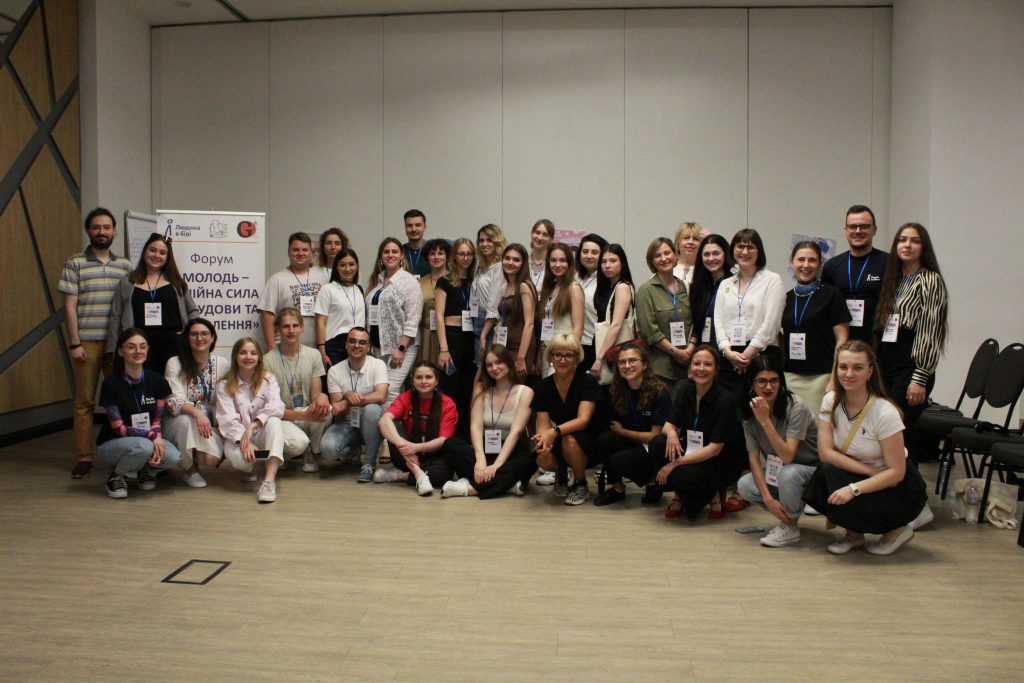
NGO “STAN” and its partners have implemented the “Young Diversity Ambassadors” (YDA) program for several years. It encourages people to begin their journey in civic activism. The program offers learning and growth opportunities and provides mentorship and financial support for the implementation of important projects. At the same time, the YDA program has created a community of conscious active people. This environment conceived the idea to create a Manifesto that would convey the crucial problems and needs of the young generation. The Manifesto we’ll talk about is the voice of the Ukrainian youth.
Not only activists or participants of the Young Diversity Ambassadors program have contributed to the Manifesto. There were also people from different social groups, from all over Ukraine, including the temporarily occupied territories. “I don’t agree with everything stated there, but I immensely respect the fact that these ideas were put together and voiced,” explains Ksenia Ukolova, participant of the “Young Diversity Ambassadors” program and the co-author of the Manifesto. “It is a representative cross-section of society. The Manifesto may not resonate with you down to the smallest detail, but it reflects the real state of things. “Often in the media space I see young people going, “We have nothing to do in Ukraine, we’ve been failed. We need to move abroad,” says Valeriya Tkachenko, the project manager of the NGO “STAN” who facilitates the educational events. “But these people don’t speak about their problems and needs. Meanwhile, Manifesto focuses on the social needs. Young people may express their ideas and convey them to the wider audience, including those involved in decision-making processes”.
The authors of the Manifesto have formulated 12 points explaining how they see relevant problems and ways to solve them. “The main idea of the Manifesto is the role of youth in the post-war development,” Tkachenko explains. “We are using the word “development” and not “recovery”, because in addition to recovering what was lost, we also aspire to create something new, building something better and utilizing approaches and views of the young people”.
Each point is phrased concisely and formulated like a motto of sorts. Based on these mottos the artist Masha Vyshedska has created a series of posters illustrating the text. The expanded explanations are available in the videos. Young people recorded a series of videos where they recite the points of the Manifesto and explain them in more detail.
Brief overview
The first point states, “We need accessible cities. I want our communities to be comfortable for everyone!” When building up cities, young people deem it integral to create accessible, ecological spaces. According to the Manifesto, it’s a matter of “both physical infrastructure transformations and the development of technological solutions enhancing autonomy and independence for people with reduced mobility.”
Another similar point is “I would like to study in my hometown, but I need to move, as all the opportunities are in the big cities.” Young people find it important to encourage local government to provide high-quality education for the rural youth, establish youth spaces, and invite experts to work in the villages.
The authors of the Manifesto also tackled the issue of the postcolonial reflection.
“We weren’t told about decolonization in school,” they say. “It is important to love the whole Ukraine, and all the more the regions they try to pry from us,” they add. This way the youth emphasize the importance of preserving the cultural and historical legacy of the regions, especially those that had been or currently are under occupation. It’s a matter of documenting personal testimonies and preserving language, traditions, and cultural monuments.
It is interesting how young people perceive their interaction with the authorities. They realize that it’s a matter of collaboration, of mutual need, “The government needs the youth, and the young people need an encouraging political system.” At the same time, they are not satisfied with the passive roles, “I want to decide, not be the tool of someone else’s decisions.”
Young people are convinced that peace is more than an absence of war (as “local conflicts also affect “sense of peace” inside the community”). They realize the integral role of establishing the dialogue between different social groups. It will reduce the number of conflicts caused by misunderstandings or stereotypes. “Society requires a space for dialogue in the communities. No one taught us how to speak with war veterans, young widows, and people with disabilities,” states the Manifesto.
Another pressing matter for young people is the stigma put on people staying under occupation. “I wanted to be the voice of the unheard, of people under occupation.”
Last but not least is the need for support. Young people realize the importance of forging bonds, both between citizens and with partners abroad. “Ukraine needs experience exchanges with other countries.” The Manifesto presents a distinctive voice of young people finding it hard and requiring support. “Plenty of people are traumatized by the war. We need to accept this and work to reduce the repercussions.” “We need support to search for ourselves, and now we can’t even cover the basic needs.”
Quo Vadis?
The last, twelfth point of the Manifesto stands out to the readers. It states, “We want to know what our future will look like.” Nowadays young people are not passive onlookers of the changes. They put all their effort into contributing to the transformations. To quote the explanation for this topic, “We are ready to fight for the world which would hear our voices, which would have our traditions respected. The world where we move closer to Europe being fully aware of how unique we are.” It is also obvious that the young people want to know which security guarantees will Ukraine have, what European integration will bring, etc.
That’s what brings us back to the collaboration of the authorities and the youth. Of course, the government needs young people, their mind, their vision, their energy, and their determination. At the same time, young people need a just, transparent political system and need to interact with it. Ideas and visions of young people shouldn’t be buried in the narrow circles of like-minded people. “I believe that the changes will be possible after the lobbying efforts aimed at the stakeholders who influence the implementation of the national youth policies,” explains Ksenia Ukolova. “Manifesto is not limited to the youth issues. It also focuses on comfortable living, and the realization of rights, needs, and aspirations. I believe that when the Manifesto is presented, some government officials will be interested in it. They will see the meaning behind it and will help us to implement it on the national level.”