


About the War and Post-War Rebuilding. Young Diversity Ambassadors in Bosnia and Herzegovina
30.08.23
This summer Young Diversity Ambassadors program participants visited Bosnia and Herzegovina to learn from the country’s experience of Post-War Rebuilding. What they have seen and heard, what they have eaten and understood – in this text.
Growing up
After the war, the country will be reconstructed. There will be lots of construction work. More and more rehabilitation programs both for soldiers and for civilians will work. The economy will come back to its normal functioning. There will be new cinema, new literature, and new art projects that will rethink and reflect the war experience.
There is an essential inaccuracy in these words. The country cannot be reconstructed by itself, and buildings will not be built by themselves, the rehabilitation programs won’t appear out of the blue. It doesn’t happen by itself. We could think this way only in our early childhood when all we had to do was to go to kindergarten and be obedient, when we knew – adults would take care of us, feed us and make us happy.
We grow up and understand we shouldn’t wait for someone to do something instead of us. In the same way we’re getting mature as citizens. We understand the country won’t govern itself and won’t rebuild itself.
“The state is me”, once Louis XIV of France said. While one person could say this, it was absolutism, usurpation of power. When everyone can say this, that means this is a healthy society, that will be alright. I am responsible for our struggle, for rebuilding and reconstruction of our country. I’m responsible for the changes my country will undergo. Will I live in a country with a rule of law depends on me. Will our public spaces be accessible for everyone? Will my history be mine, not imposed on me? Will my memory be really mine? Will I live at home, in my country? In a country I want to live in.

What should it be, such a country? And how can we make the result similar to the idea? There are no simple answers. And we have to start thinking about these questions right now. To study and work. To learn from others who have been in such a situation.
How to build your home
The Young Diversity ambassadors program was designed for young people who are making their first steps in civic activism. Their projects are about decolonization, art, feminism and LGBTQ+ rights, environmental justice. But if we look deeper into them, we will see all these projects are about building your home, about creating post-war Ukraine the country we want it to be. That’s why an important stage of the program was a study visit to Bosnia and Herzegovina.
In the early 1990s this country lived through a long large-scale war. Almost 30 years have passed since the fighting stopped. From this time distance we can see what challenges the post-war society faces and what are the hardest of them. We can also see what decisions and steps were successful and what failed. Even taking into account the differences between Ukrainian and Bosnian situations, this experience is extremely valuable for us.
More than a journey
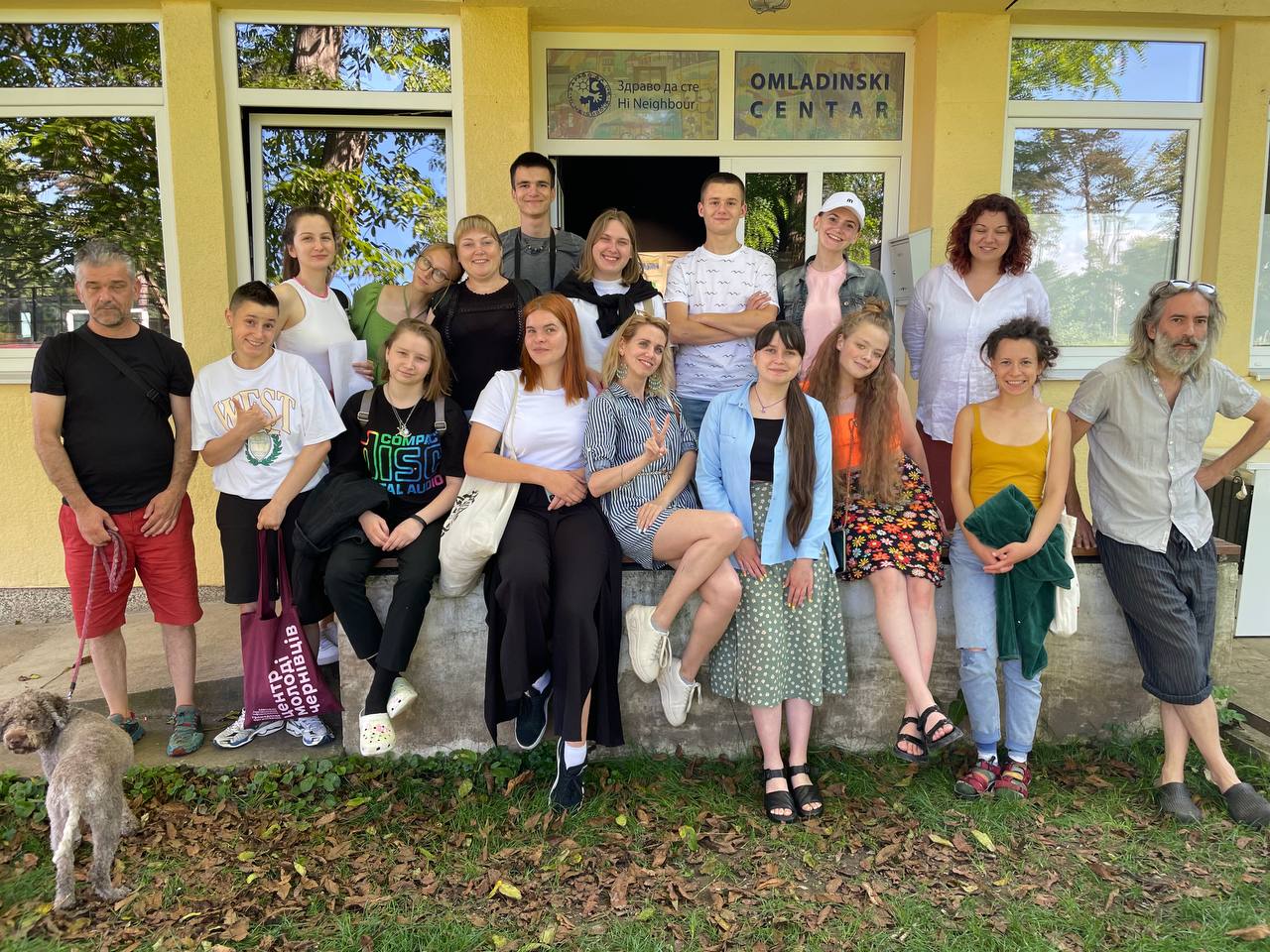
On June 24th, 14 participants of The Young Diversity ambassadors program with two facilitators set out on a journey from Lviv. Singing songs in a bus, diverse adventures and difficulties on the borders were in front of them. And also there was a new country, its people and their culture in front of the participants. There was its cuisine; some liked it and some did not like it at all. There was an oriental coffee, so different from what we call an oriental coffee. There was the sun that shines mercilessly, and the sea that is safe.
Unfortunately, it was not just a trip. The full-scale war in Ukraine lasts for the second year. We are fighting for our independence. Everyday we lose our relatives, friends and fellow citizens. Russia is attacking residential buildings, schools and kindergartens. It sends its deadly missiles to the city centers as it recently happened in Chernihiv. Children die. Parents die. Elderly people die. An apartment building is being destroyed in a second like a sand castle. We witness these events. Some of us see this with their own eyes. Some of us see and realize it was their house. Some of us cannot see this anymore. This is the way we live, those who are still alive.
Even when all this will end, we won’t be able to get rid of this experience. We have to learn how to live with it and to help ourselves and others. We must learn how to build a new, better thing on the spot of a destroyed one. This is why young diversity ambassadors came to Bosnia and Herzegovina. This is why it was not just a trip.
What they have understood and learned
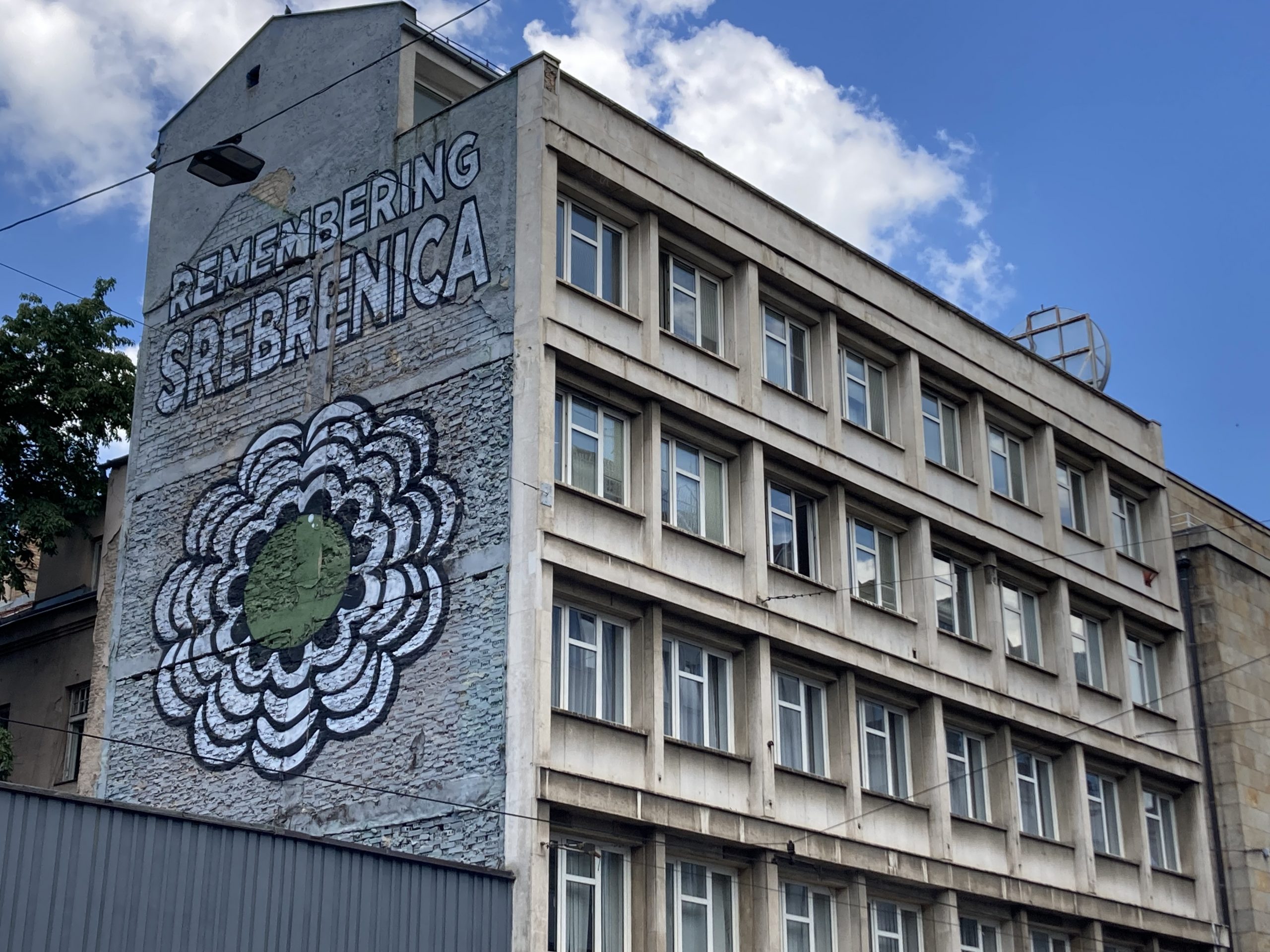
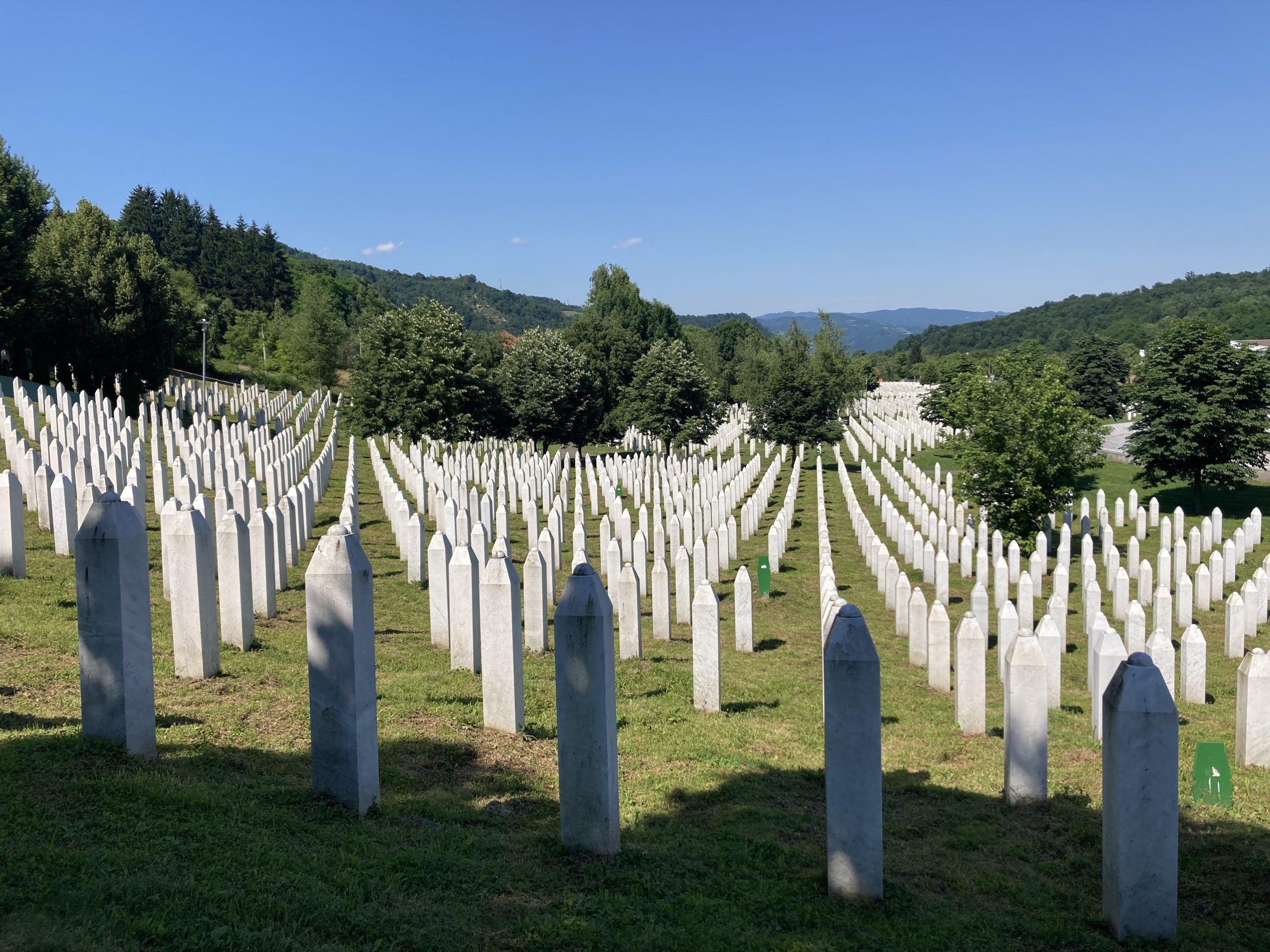
Young people lived in Sarajevo. This city was under siege during the Bosnian war between April 5th 1992 and February 29th 1996, 1425 days in total. They talked to Sarajevo residents and local activists. They visited War childhood museum and Srebrenica genocide memorial. They also traveled to Mostar and Banja-Luca. Everywhere they talked to people and tried to understand what lessons would be useful in Ukraine. Many things astonished participants. Here is what they say about this.
Daria Kremzel: “Three ethnic groups live inside the country. Origins, religion and views divide them. Each group has its president, and each has its education program. In some cities, like in Mostar, they don’t even intersect, they don’t cross bridges, both symbolic and real. How can we call this a united country? I understood this was a frozen conflict, a ticking time bomb. You cannot live next to those who did genocide, and pretend everything is alright. Evil should be punished because it produces new, even bigger evil”.
Solomiya Zinets-Matsyshyn: “We saw when peace is imposed on those who were not ready for it at all, it becomes a frozen conflict. Thirty years have passed, and still we see tensions between ethnic groups, between Bosniaks, Serbs and Croats. Many people told us in Bosnia and Herzegovina the war can start at any moment”.
Vladyslav Lovha: “A reflection was very strong. Almost everyone cried, because those were the topics we discussed. We drew parallels between the war in Ukraine and the war in Bosnia and Herzegovina. We understood there aren’t many similarities. On the other hand, the stories from the War Childhood Museum resonated with our feelings, as well as stories people told us, and the monuments we saw. We understand we will have a lot of such stories after Ukraine’s victory. So many things we will have to deal with. But we are united, we are together. We don’t have conflicts inside our society. And if there are some, they aren’t so important”.

Participants say they mostly saw what they shouldn’t do in terms of post-war rebuilding of the country. This “opposite experience” is valuable nonetheless. Maybe thanks to these lessons young people, after returning from this trip, emphasize how important it is for Ukrainians to stand together.
“I looked at people who were saying ‘We don’t care, we don’t need this, we cannot do anything with it’, and I understood even better I shouldn’t be like them. I need to take matters into my own hands. When you start from yourself, many people will follow, and you won’t be alone. This is what the post-war rebuilding is about. We all will come together for our aim, for Ukraine to prosper”, says Vladyslav Lovha.
Youth also had many reflections that post-war rebuilding is not always about construction works. The main thing is to help people to recover.
“Post-war rebuilding is a huge work, and it consists of more than reconstructing factories, and destroyed houses. First of all, there is a mental trauma of the population, among civilians, among children and soldiers too”, says Inna Boiko.
“To cure traumatic disorders we will have to put in lots of energy. We will need to make people who lived through the Russian occupation, and all these things, receive proper psychological support. So that they won’t feel “different”, even when they Speak Russian. So that nobody would dare to tell them “You were under the occupation, you did not do anything”.
The youth and the sea
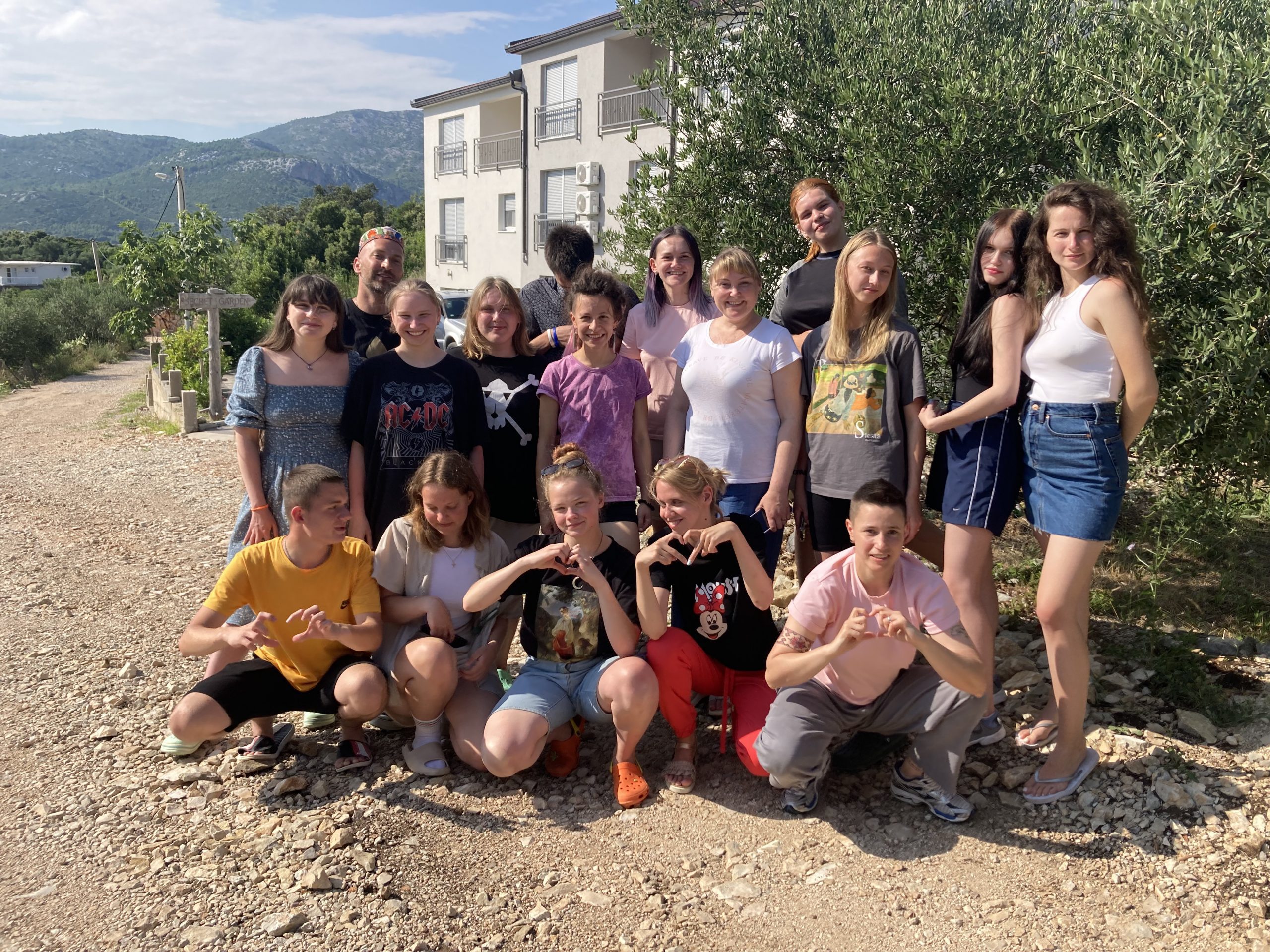
Two last days of the journey young people spent on the seaside, on a spit near Neum city, in a small fishing village with just a few houses. There were almost no beaches as well as no flashy tourist infrastructure. Such kind of an Adriatic idyll where you can buy cheap freshly caught fish. There was a wooden platform about 20 meters from the coast, with lots of mussels. Boys and girls were swimming to the platform with a plastic basin, gathering those mussels for dinners and breakfasts. They cooked them on a traditional stone stove.

They cooked food together and ate together. Talked. Thought. Planned. Because we have no other way but together. Especially today. And tomorrow too, and for the day we will celebrate our victory. And for later when all Ukrainian lands will be demined and it will be again possible to gather on the seaside, Black or Azov sea, our sea.
The project “Young Diversity Ambassadors” is implemented by STAN NGO in partnership with the “Action Aid” alliance for rights, equality and international solidarity with the support of the Disasters Emergency Committee (DEC). Revitalization and insulation of the safe spaces for youth is implemented with the support of Global Fund for Children (USA) та terre des hommes (Germany).