


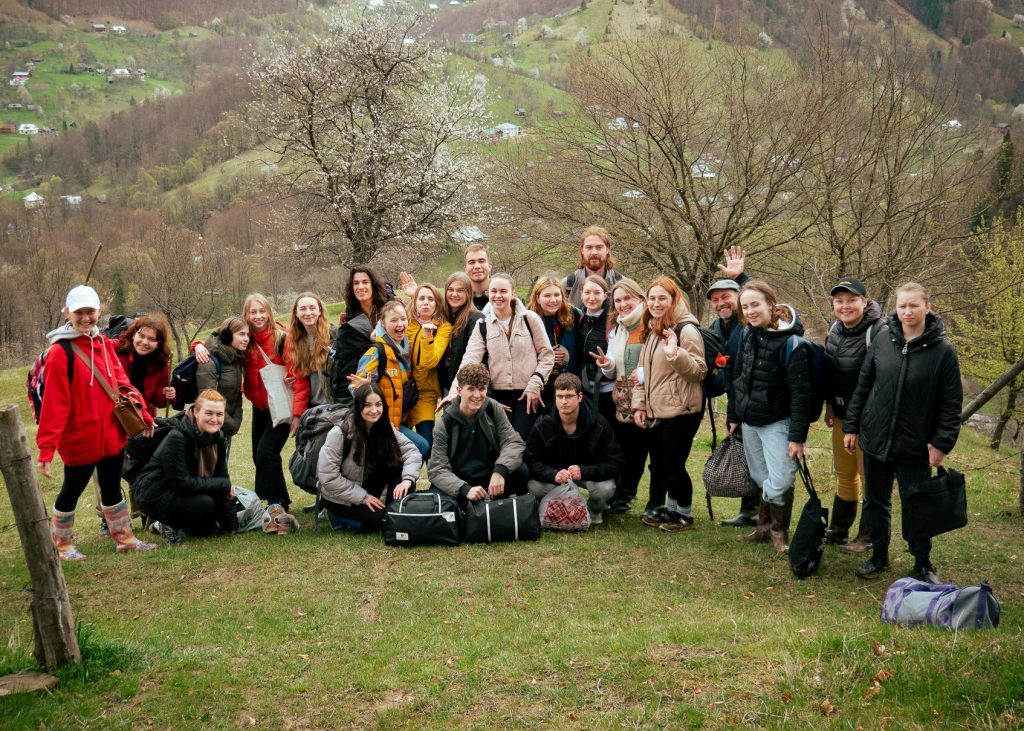
Young Diversity Ambassadors – from training to the action plan
10.07.23
The Young Diversity Ambassadors program aims at helping Ukrainian youth to take the first steps in civic activism. Participants have already attended introductory workshops where topics of their upcoming work were introduced to them. They also visited their peers in other regions of Ukraine for experience exchange. After that, young people chose a field they will be working in and took part in several in-depth workshops. They dived into the topics according to their interests to design projects they will implement during June and July.
Keystones
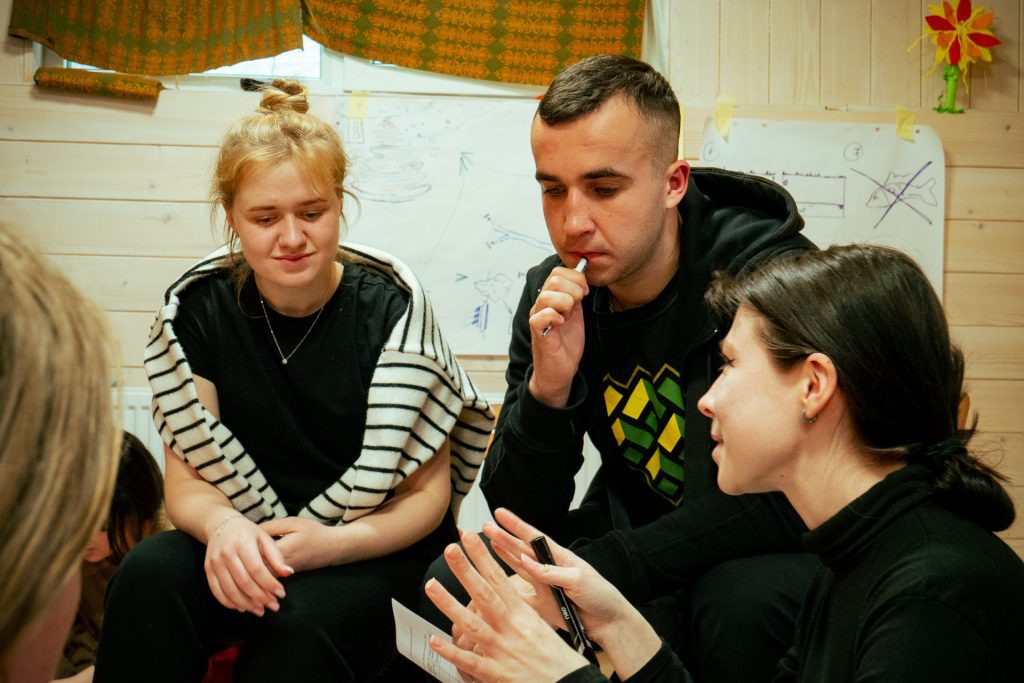
The training took place at Khata Maysternya space in the Carpathians. At the beginning of the four-day session, participants had a chance to think about how the proposed topics correspond to their everyday life and their communities’ needs.
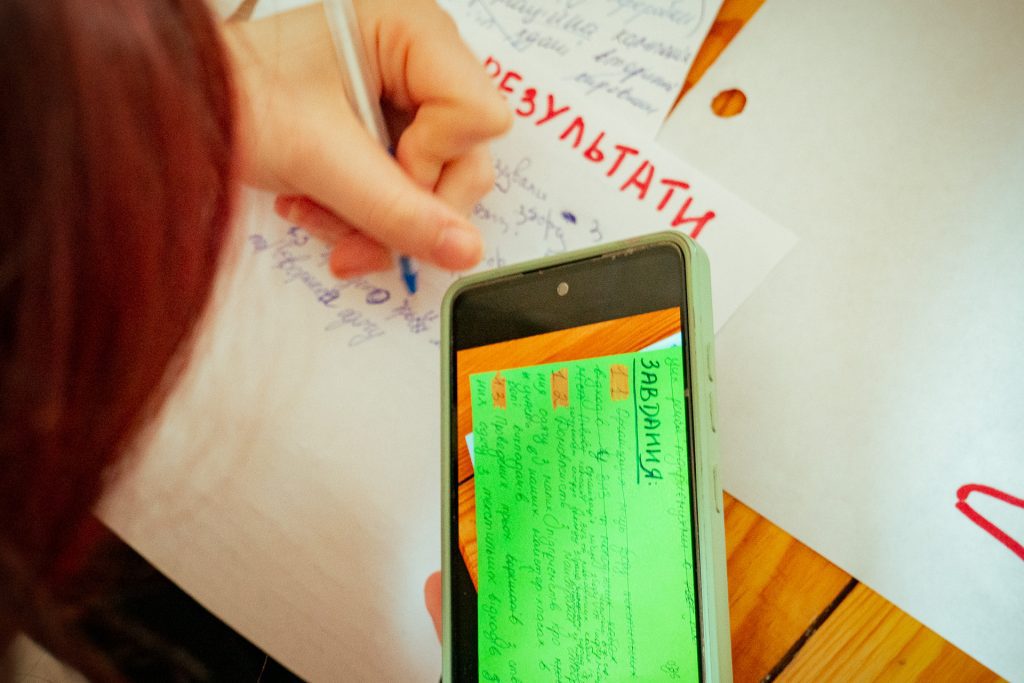
After that, participants discussed how they could influence the issues they had identified, and what tools would be appropriate for that. On the third day participants worked on their specific initiatives, and discussed them with peers, trainers and facilitators. They received feedback, and what is most important – they found like-minded colleagues who will implement the project together with them.
Four topics were proposed to participants:
- Decolonization and memory for the future
- Culture, art, and equal rights
- Equality, feminism, and LGBTQI+ people.
- Eco activism and climate justice
Although these topics might look different, they all are about human rights, the value of diversity and the post-war revival of Ukrainian society.
“There are two keystones – human rights and the value of diversity that creates a space for development. Not only expressing tolerance, but understanding that a diverse community is more resourceful”, says Oleksandr Voitenko, program’s trainer.
What does ecology have to do with this
A tie between ecology and human rights is not obvious, but they are closely tight. As Voitenko explains, ecology and climate justice are first of all connected with a person’s right to private life (when one organizes it in a way it fits them).
“We wanted to show one can influence both small issues in the communities and global ones, like deforestation or climate change. We discussed these issues together with participants and understood we have to start with ourselves and our closest environment: our street, our neighborhood, or our village. For global changes, we need different tools. Although we can influence them too, the main task is to concentrate on bringing our place in order”, says Voitenko.
Young ambassadors received these ideas well. Inna Boiko told about her village Myhove in Chernivtsi Oblast which receives many tourists. Myhove has wonderful Carpathian landscapes, its forests full of berries and mushrooms. There is a ski resort too. And here we have another side of the coin: huge problems with waste management and sanitation.
“The reason for these problems is the resort and its hotels. There is no control over the sanitation there. And everything goes into the water, into our river. No one can bathe there now. This is a huge problem, and one day I will deal with it”, says Boiko.
Inna has already gathered like-minded young people of Myhove and they have started changing their home together. For a start, they will create a recreational zone by the river. The Green Space project has got support from STAN NGO. Inna’s team will clean up the territory, put benches and organize a walking zone. They will install garbage containers for recycling and information boards to tell why recycling is important.

An art of being heard
In the arts and culture section, participants focused not on creativity itself but on tools art can provide to defend human rights. They discussed how it allows people to be heard and to be seen, how it shapes our views.
“They told us and showed in practice how art can influence, how people can express their protest feelings or animosity. How meaning is plugged into it”, says Yulia Revak, program participant.
These things are important for a student rights protection initiative Yulia wants to implement. With her team, she is planning to create a series of illustrations about violations of these rights.
“For instance, to pass an exam, a female student has to come wearing a skirt, so that a teacher would look at her, or touch, I don’t know… And a student would see a poster about a girl and a teacher somewhere at the bus stop, and would realize she had something like this in her life. She would scan a QR-code and read how to deal with this situation. She would become aware her rights have been violated, how to get legal support and make that teacher accountable”, says Revak.
“Тranssexuality through a lens”
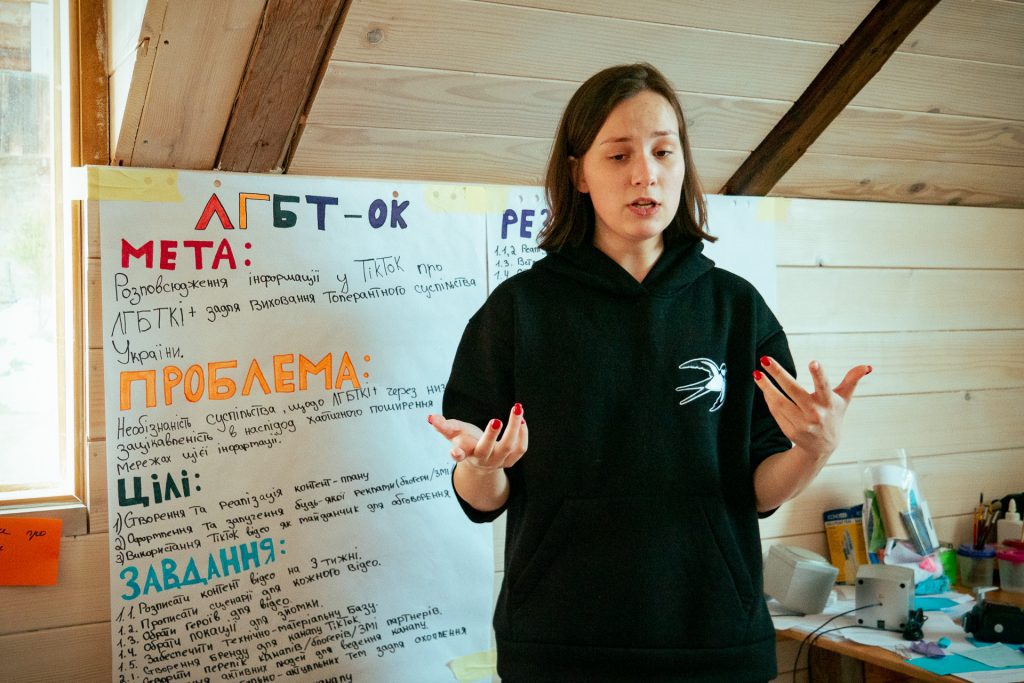
The main accent in the section on feminism, gender equality and LGBTQ+ rights was on equal rights for everyone. Participants discussed how LGBTQ+ persons suffer from misconceptions about them and sexuality in general. Sometimes people just don’t understand them, and sometimes this reaches the level of violence. They are often not included in society. Several participants decided to work with these issues.
Kir Nemichev is a transgender guy. He is new in civic activism, and the “Young Diversity Ambassadors” program pushed him to implement his project “Тranssexuality through a lens”. This will be a short film where the main role will be played by Kim’s friend, a transsexual guy.
“This won’t be some social advertisement like ‘Hi, I’m Oleksandr, I’m transgender and here is my life’. It won’t be an educational video but a film that would be interesting to watch. It should show what it means to be transsexual and how we live with it”, says Kir.
Kir and his team are planning film screenings in Chernivtsi and perhaps in other cities. The video will be published on the internet too.
“I understand it will get different reactions. But I know well that illiteracy in this field is the reason for transphobia and hatred. That’s why I want people to have information. I hope this project will educate them a little”, says Kir.
Repin is ours
When society rejects its colonial heritage, it opens a space for creating something new. And for the youth, this means a chance to build a country they would like to live in. Maybe this is the reason why most of the initiatives of the program are in the field of decolonization and memory for the future.
“We discussed the approaches to preserving and rethinking our collective memory. We talked over who and for what is shaping our memory, about colonization policies like erasing the memory of minorities. In this context, our biggest achievement was attracting attention to communities less represented in Ukraine. Another achievement is to show our history is very diverse and we have to rethink whether we counted everyone when we studied at school. This is reflected in the projects’ ideas. Many of them are about revealing and telling previously untold stories”, says Yulia Liubych, the facilitator of the section on decolonization.
It is the case for the “Repin is ours – a festival on rails”. It will take place in suburban trains in several regions of Ukraine. Illia Repin, an artist, was born in a town of Chuhuyiv in Kharkiv Oblast. He comes from an old Cossack family. His works have many Ukrainian motives. However, until recently he has been presented as a Russian painter, and only today the approach is changing. In the Metropolitan Museum in New York, his paintings are signed now as works of a Ukrainian artist.
The festival is one more step to deconstruct the image of Repin as “Russian classic”. Magran Tata, Young Ambassadors Program participant from Kharkiv explains it this way:
“He is a Ukrainian painter, but most of his legacy is in the Russian galleries. We are planning diverse activities. We are going to print large banners that will be placed in suburban trains to attract public attention. We will print out reproductions of his works – better they would hang in a suburban train ‘Kharkiv – Chuhuiv’ than in Moscow’s Tretyakov Gallery”.

Staying open to other people
Participants are just starting their work in civil activism, and the “Young Diversity Ambassadors” is a chance for them to learn many things. To plan budgets, write grant applications for the projects. To learn more about topics of their interest, about human rights. And the main thing is to learn how to work in teams and to learn from colleagues’ experiences.
It is not only about training but also about the experience of making things done. As a result, youth will implement projects useful for their communities. During the project’s implementation, as well as during the participation in the program in general, young people are supported by trainers, facilitators and by new friends.
“We’ve had many training sessions and teamwork exercises. We’ve learned a lot about project implementation in other countries. I also liked the atmosphere. This is STAN NGO and their approach – a lot of care. You always can approach organizers and ask something. There are always those who would support your initiatives. The main thing is to be open to others”, says Magran Tata.
The project “Young Diversity Ambassadors” is implemented by STAN NGO in partnership with the “Action Aid” alliance for rights, equality and international solidarity with the support of the Disasters Emergency Committee (DEC). Revitalization and insulation of the safe spaces for youth is implemented with the support of Global Fund for Children (USA) та terre des hommes (Germany).